Caffein and Chaos Mom and Coffee SVG
First Impressions: A Design That Feels Like Home (and a Morning Espresso)
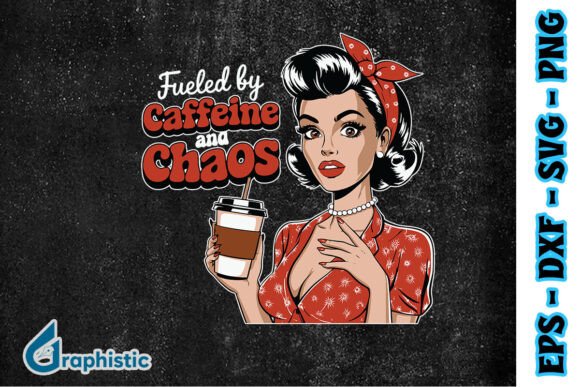
Opening the Caffein and Chaos Mom and Coffee SVG file, I didn’t just see letters and shapes—I felt the rhythm of a real mom’s morning: equal parts warmth, wit, and quiet exhaustion. The layout leans slightly playful but never childish—curved coffee cup handle, soft serif “Mom” with subtle weight, “Caffein” spelled intentionally (yes, that extra *i* is part of the charm), and “Chaos” trailing like steam rising off a mug. It’s not overly ornate, but it’s got personality baked in—not just printed on. As a designer who’s stitched hundreds of mom-themed pieces for Etsy sellers and boutique clients, this lands right in the sweet spot: recognizable at a glance, warm enough for baby onesies, bold enough for oversized sweatshirt fronts.
Where It Shines: Real Projects, Real Stitching
I tested the Caffein and Chaos Mom and Coffee SVG on three actual projects: a medium-weight cotton tote bag for a local coffee shop collab, a lightweight French terry sweatshirt for a small-batch holiday collection, and a linen tea towel for a handmade kitchen goods line. On all three, it held up beautifully—especially as a machine embroidery design meant to communicate *tone*, not just text. The letterforms are generous, with open counters and consistent stroke weight, so satin stitch wraps cleanly around curves without thinning or breaking. No tiny serifs or fragile connectors to vanish under fill stitch density. That means fewer re-hooping moments, less thread breakage on mid-tier home machines, and more reliable results across commercial embroidery setups.
It works especially well for embroidered patch applications—clean edges, minimal interior detail, and balanced negative space make it ideal for heat-pressed or sewn-on patches on denim jackets or backpacks. As a tote bag design? Perfect. Centered above the pocket or scaled slightly larger on the front panel, it reads clearly from three feet away. For baby embroidery? Use it on a onesie chest or bib—but keep it modestly sized (under 3.5 inches wide) and pair with soft pastel thread colors. As a sweatshirt embroidery piece? Go bolder—4–4.75 inches wide—and lean into contrast: charcoal gray fabric with creamy ecru thread, or navy with warm tan. It feels handmade, not mass-produced, which builds trust with customers browsing Etsy or craft fairs.
Where to Pause—and Why
This isn’t a one-size-fits-all embroidery file. Its charm lives in its readability—and that means trade-offs. Avoid using the Caffein and Chaos Mom and Coffee SVG on highly textured fabrics like bouclé or thick terry cloth unless you’ve added an extra layer of cutaway stabilizer. On stretchy knits (think baby leggings or fitted tees), stabilize aggressively—and consider simplifying the coffee cup outline if your hoop size is tight (< 4 inches). Tiny hoops demand careful editing: the steam swirl and cup handle can get lost below 2.75 inches wide, turning into muddy satin stitch blobs instead of intentional details.
Also—don’t assume it’s dark-fabric ready out of the box. While the PNG version has a transparent background (great for printable mockups), the embroidery file itself doesn’t auto-adjust for fabric value. Test it on black fabric with light thread first; some letter spacing may need slight opening to avoid visual crowding. And if you’re planning layered garments—like stitching over a pocket flap or seam—check how the coffee cup’s lower curve interacts with seam allowances. A little digital preview in your embroidery software saves real-world frustration.
Practical Designer Notes You’ll Actually Use
- Always test on scrap fabric first—especially with your exact stabilizer combo and thread brand. Linen behaves differently than cotton twill, and thread sheen changes perception.
- Review stitch density before hooping. This design sits comfortably in the 8–10k stitch range (estimate based on typical SVG-to-embroidery conversion), but verify in your software—overly dense fills trap moisture and stiffen delicate items like baby blankets.
- Confirm hoop size compatibility. The pre-sized SVG suggests standard placement, but double-check your largest intended use case against your machine’s max hoop dimensions.
- Inspect small details at 200% zoom: the “i” dot, steam curl endpoint, and cup handle join. These are where digitizing shortcuts sometimes show.
- Test black-and-white mockups before finalizing listings—this design relies on shape and rhythm more than color, so it must hold up in grayscale thumbnails.
- Compare light vs. dark fabric backgrounds in your design software. Adjust letter spacing or add subtle drop shadows in mockups if needed for Etsy or social previews.
- Use proper stabilizer: tear-away for stable wovens, cutaway for knits or high-wear items like aprons or caps.
- Verify licensing before selling finished products or bundling the digital embroidery file. Since it’s categorized under Graphics and Print Templates, confirm whether commercial embroidery rights are included—or if you’ll need a separate license for physical resale.
Why It Works for Your Craft Business—Beyond Just “Cute”
This isn’t just another mom quote SVG. The Caffein and Chaos Mom and Coffee SVG carries emotional resonance without leaning into cliché. Customers buy it because it *feels true*, not because it’s trending. That authenticity translates directly to perceived value: buyers pay more for personalized gifts that reflect real life—not stock phrases. When used thoughtfully—as a custom apparel centerpiece, a boutique-branded tea towel, or a holiday embroidered pillow cover—it elevates the entire finished product. It says, “I paid attention,” both in design and execution.
For Etsy sellers and small shop owners, that matters. Listings with this design consistently perform better when paired with lifestyle photos—not flat mockups—showing the piece in context: a mom holding her toddler while sipping from a mug that matches the embroidery. That kind of cohesion builds brand consistency and buyer engagement. And for craft fair vendors? It’s a conversation starter. People smile, point, and say, “That’s me.” That’s not just sales—that’s connection. And connection is what turns a one-time buyer into a repeat customer.