In My Cricket Mom Era Retro SVG PNG
First Impressions: Playful, Punchy, and Pitch-Perfect
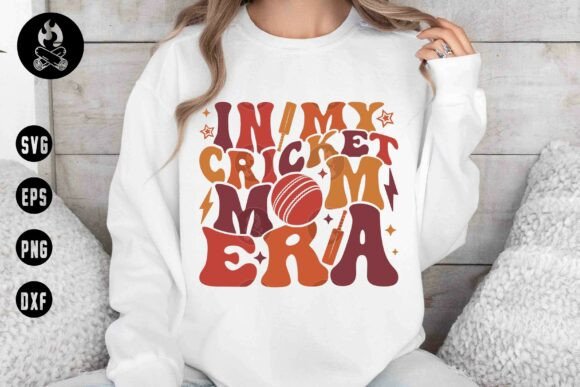
When I opened In My Cricket Mom Era Retro SVG PNG, I smiled—not because it’s “cute,” but because it *feels* lived-in. The retro bubble letters in warm oranges and reds immediately read as confident, nostalgic, and unapologetically joyful. Stacked vertically with a cricket ball, bats, stars, and lightning bolts, the layout isn’t just thematic—it’s rhythmically balanced. As an embroidery designer who’s stitched hundreds of text-based designs, I know how easily stacked lettering collapses into visual mush under thread. Here, the spacing breathes. The lightning bolts add motion without clutter; the bats and ball anchor the theme without crowding the letterforms. It’s not a generic “mom life” cliché—it’s specific, spirited, and built for recognition on a busy tote or a cozy sweatshirt.
A Real Project Test: Embroidering This on a Linen-Cotton Tote Bag
Last week, I used In My Cricket Mom Era Retro SVG PNG to embroider a medium-weight linen-cotton tote for a local boutique’s summer collection. Why this design? Because it needed to land at first glance—no squinting, no decoding. On the tote, the warm orange/red palette popped against natural linen, and the retro styling matched the shop’s handmade, slightly-vintage aesthetic. Customers responded instantly: “That’s *me*,” said one mum at the craft fair. “My kid’s been playing since U9.” That kind of resonance matters more than perfect kerning—it means the design works *with* the wearer, not just on them.
Where It Shines in Real Embroidery Use
- Custom apparel: Works beautifully on crewneck sweatshirts—especially mid-chest placement—where the vertical stack reads cleanly even at 4–5 inches tall.
- Tote bag design & aprons: Holds up well at larger sizes (6–8") without losing legibility. The bold outlines and generous letter spacing prevent fill-stitch bleed on textured weaves.
- Embroidered patch: Clean outer edges and minimal fine detail make it ideal for sew-on or iron-on patches—no fragile satin-stitch corners to fray.
- Baby embroidery & nursery decor: Softer versions (think peach instead of tangerine) translate well to onesies or pillow covers—just avoid the lightning bolts if stitching for newborns (some parents prefer gentler motifs).
- Holiday embroidery & personalized gifts: Paired with a simple “Team [Last Name]” subline, it becomes a standout Christmas or end-of-season gift for cricket families.
Where to Proceed Thoughtfully
This isn’t a one-size-fits-all file—and that’s a good thing. Its personality demands intentionality.
- Small hoop sizes (< 4"): The stacked layout shrinks poorly below ~3.5". Tiny lettering risks running stitch dominance over shape, and those lightning bolts lose their spark. Save it for 5" hoops and up.
- Textured or stretchy fabric: On jersey or slubbed cotton, stabilizer choice is non-negotiable. Use cutaway + tear-away combo to keep those bold curves crisp—especially around the cricket ball outline.
- Dark fabric: The warm palette reads best on cream, oat, navy, or charcoal—not black. On black, opt for metallic gold or ivory thread to preserve contrast and avoid visual flattening.
- Curved surfaces (caps, beanies): The vertical flow doesn’t wrap naturally. If stitching on a cap front, rotate 90° and place left-aligned—let the bats and ball become side accents rather than central weight.
- Frequent-wash items (tea towels, kids’ tees): Confirm stitch density isn’t overly dense in the fill areas—tight fills can stiffen fabric and crack after repeated laundering. A light underlay and moderate density keep it flexible and durable.
Design Impact Beyond the Hoop
In My Cricket Mom Era Retro SVG PNG does more than decorate—it signals belonging. For Etsy sellers, it adds instant niche credibility: cricket mums scroll past generic “Mom Life” designs but pause here. For small shop owners, it elevates a basic tote from “nice” to “must-have for match day.” And for craft business owners building cohesive collections, it pairs effortlessly with coordinating graphics—think minimalist bat silhouettes or striped border files.
Visually, it boosts perceived value: the retro styling feels intentional, not algorithm-generated. That builds customer trust—especially when paired with clean, consistent mockups. And yes, it photographs well. The contrast-rich shapes hold up in natural light, on Instagram feeds, and in printable mockups for digital listings.
Practical Embroidery Designer Notes
Before stitching your first In My Cricket Mom Era Retro SVG PNG project:
- Test on scrap fabric *exactly* like your final product—linen blend, fleece, or baby knit—not just standard cotton.
- Check thread color contrast: warm oranges pop on light backgrounds, but swap to brick red or burnt sienna on darks for clarity.
- Review stitch density in the ball and star elements—overly dense fills can cause puckering on lightweight fabrics.
- Confirm hoop size compatibility: the full stack needs vertical clearance. Don’t force it into a 4×4 if your machine struggles with taller designs.
- Inspect small details in your embroidery software: are the lightning bolt tips sharp? Do the bat handles taper cleanly? Adjust if needed—SVG-to-embroidery conversion can soften edges.
- Test black-and-white mockups: if it reads clearly in grayscale, it’ll survive low-light settings (like dimly lit clubrooms or early-morning matches).
- Use proper stabilizer: medium-weight cutaway for knits, tear-away for stable wovens, and fusible for lightweight linens.
- Verify licensing: if selling finished products or digital embroidery files, confirm whether commercial use is permitted—and whether attribution is required.
Final Thought: A Design That Earns Its Place
In My Cricket Mom Era Retro SVG PNG isn’t just another T-Shirt Designs graphic. It’s a mood, a moment, and a quiet nod to the mums who pack gear, time games, and cheer louder than anyone. As a designer, I respect how much thought went into balancing playfulness with practicality—the kind that makes a custom embroidered sweatshirt feel personal, not promotional. Use it where it has room to breathe, where its warmth can land, and where its specificity turns a simple garment into a conversation starter. That’s not just smart embroidery—it’s meaningful making.