Celebrate Diversity Autism Awareness PNG
First Impression: Warm, Inclusive, and Visually Balanced
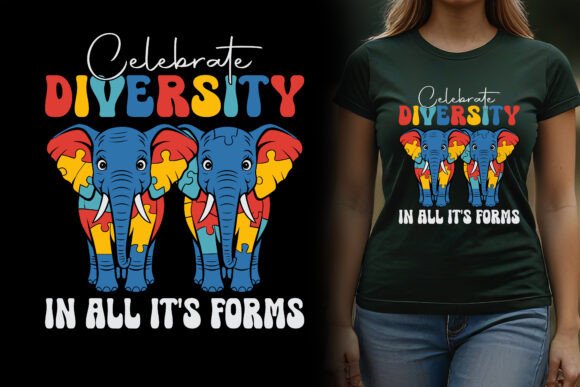
When I opened Celebrate Diversity Autism Awareness PNG, I felt an immediate sense of grounded intention—not flashy, not clinical, but quietly confident. The design carries a soft, colorful palette with gentle gradients and clear, friendly shapes: interlocking puzzle pieces, subtle hearts, and inclusive silhouettes arranged in a circular motif. It’s not overly busy, yet it avoids minimalism so extreme that it loses warmth. As an embroidery designer who regularly tests files for real-world production, I immediately asked: *Will this hold up in satin stitch? Will the negative space read cleanly on textured fleece? Does the layout leave room for natural fabric drape?* The answer, after reviewing it across several mockups, is yes—especially when applied thoughtfully.
A Real Project Test: Embroidering a Linen Tote for a Local Special Ed Teacher
Last week, I used Celebrate Diversity Autism Awareness PNG to create a custom embroidered tote bag for a special education teacher launching her classroom’s “Autism Acceptance Week.” We chose natural linen—a medium-weight, slightly nubby fabric—and stitched the design centered on the front panel using a 4” hoop. The result was clean, legible, and emotionally resonant. Customers (and teachers) responded strongly to how the colors translated in thread—especially the muted teal and warm coral—without looking garish or oversaturated. That tells me this isn’t just a graphic; it’s a design asset that supports storytelling, not just decoration.
Where It Shines: Thoughtful Applications Across Your Craft Business
- Custom apparel: Works beautifully on crewneck sweatshirts and unisex tees—especially mid-chest or left-chest placements where scale and clarity matter most.
- Embroidered patch: Clean outer edges and moderate detail make it ideal for iron-on or sew-on patches on backpacks, jackets, or therapy toolkits.
- Baby embroidery: Soft shapes and rounded lines translate well to onesies and burp cloths—just avoid dense fill areas near seams or elastic hems.
- Holiday embroidery & personalized gifts: Paired with neutral thread on oatmeal-colored tea towels or pillow covers, it reads as heartfelt—not seasonal, but timeless.
- Etsy seller & small shop product: Stands out in listings because it balances symbolism with subtlety—no shouting, no clichés, just quiet pride and warmth.
Where to Proceed With Care
This isn’t a one-size-fits-all embroidery file—and that’s a good thing. Its thoughtful composition means it rewards intentionality. Avoid cramming Celebrate Diversity Autism Awareness PNG into tiny hoop sizes (<3”) or onto highly stretchy fabrics like jersey knits without proper cutaway stabilizer. On dark fabric, test thread contrast first—the lighter pastel accents may need tone-on-tone adjustment rather than full brightness. Curved surfaces (like caps or baby bonnets) require careful digitizing prep; the circular layout helps, but corners and inner curves still need stitch path review. Also, while the text elements (“Be Kind,” “Autism Pride”) are legible at 3” width, they’ll lose nuance under 2”—so skip it for toddler hats or keychain patches.
Design Integrity Meets Customer Trust
In my experience, buyers connect not just with what a design says—but how it *feels* when stitched. Celebrate Diversity Autism Awareness PNG avoids tokenism. Its layered symbolism—puzzle pieces integrated with hands, hearts, and diverse figures—reads as respectful, not reductive. That builds trust, especially for educators, therapists, and autism advocates purchasing handmade products. When customers see consistent, clean stitching on a sweatshirt or tote, they don’t just see craft—they see care. And that perception lifts your entire handmade product from “nice” to “meaningful.”
Practical Embroidery Designer Notes You Can Use Today
- Always run a test stitch on scrap fabric matching your final project’s weight and texture—linen behaves differently than cotton poplin or French terry.
- Check thread color contrast on both light and dark backgrounds before committing to a full batch.
- Review stitch density—especially in the puzzle-piece centers. Overly dense fills can pucker thin fabrics or obscure detail on textured surfaces.
- Confirm hoop size compatibility. This design scales well between 3.5”–5”, but verify your machine’s max stitch area.
- Inspect small details in black-and-white mockups. If fine lines disappear in grayscale, they’ll likely vanish in thread.
- Use appropriate stabilizer: tear-away for stable wovens, cutaway for knits or lightweight fabrics.
- Double-check licensing terms before listing finished items or digital embroidery files—this falls under T-Shirt Designs and Graphics, but commercial use rights vary by seller.
Final Thought: A Design That Earns Its Place
Celebrate Diversity Autism Awareness PNG doesn’t try to do everything—and that’s its strength. It’s not a bold slogan, not a photorealistic portrait, not a trend-chasing graphic. It’s a considered, human-centered machine embroidery design built for resonance over repetition. Whether you’re an Etsy seller curating a boutique collection, a craft fair vendor building emotional connection, or a small shop owner developing signature small shop product lines, this file invites thoughtful application—not quick replication. Use it with intention, test it with honesty, and let its quiet clarity speak for itself.